On 3 September 2025, CEO Amanda Loeffen helped facilitate a workshop with SD-WISHEES at the conference hosted by the Network of Environmental Studies of Portuguese-Speaking Countries (REALP) at the Universidade de Évora, Portugal. This event brought together experts, researchers, community representatives, and students to discuss how to protect cultural and natural heritage from the growing impacts of climate change.
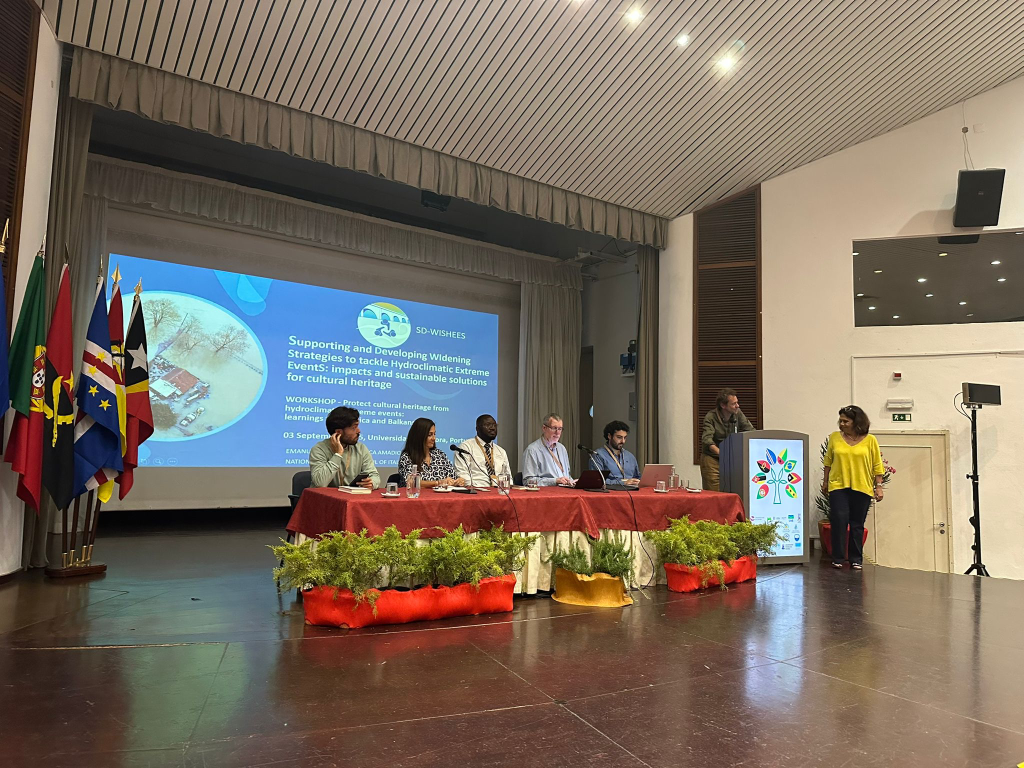
The workshop was part of the side event “People and Nature: Research into Sustainability” and focused on practical, innovative strategies to safeguard historic monuments, archaeological sites, natural landscapes, and intangible traditions from extreme events such as storms, floods, and droughts. Participants explored how these challenges affect communities in both Europe and Africa in the context of Water-Climate-Cultural Heritage Nexus. They also shared case studies from the Balkans and African regions, and identified ways to strengthen resilience through research, innovation, and collaboration.
The workshop was introduced by Emanuele Romano (NR-IRSA) who delivered a brief summary of the project and its goals. Natalia Shatirishvili(WEG) also presented SD WISHEES’ Roadmap on Strategic Research and Innovation Needs and Priorities to Protect Cultural Heritage from Extreme Hydroclimatic Events – an initiative that looks to identify knowledge gaps, highlight good practices, and propose practical pathways to enhance the resilience of cultural heritage to increasing climate-related risks.
The session included a panel discussion on Research & Innovation Priorities for Protecting Cultural Heritage from Hydroclimatic Extremes moderated by Marco Orlando (PRIMA Foundation) from SD-WISHEES, and brought together Luiz Miguel Oosterbeek (Instituto Politécnico de Tomar), Vasco Chiteculo (SASSCAL Angola Node), Ilda Mannino (Venice International University, SMACH Forum), and LorenzoVenezia (European Students’ Association for Cultural Heritage). The speakers of the panel covered topics such as the need to look beyond climate-centric approaches and focus on the ecosystems, how knowledge and public participation is key for sustainable results, especially the perspective of the youth. Overall, there was an emphasis on how protecting cultural heritage from hydroclimatic extremes requires integrated, community-based and cross-sectoral collaboration.
The session also included a segment with the presentation of different case studies and the exchange of best practices in different contexts in order to address and reduce the impacts of extreme events on Cultural Heritage. This exchange further emphasised how it is essential to engage communities, share knowledge and foster international cooperation.
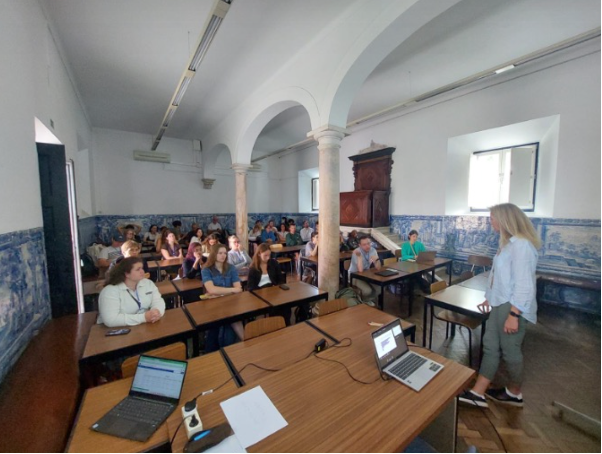
Among the other segments of the week, Amanda facilitated the joint SD-WISHEES and Water4All Youth Workshop. This session explored how youth – scientists and students – think about the Water-Climate-Cultural Heritage Nexus. Around 30 young scientists that focus on energy, environment, engineering and biology came together to exchange ideas and knowledge on the nexus. Throughout the session the participants highlighted their interests such as nature-based adaptation, hydroclimatic events and cultural heritage preservation and the key challenges they identify as well as solutions or strategies to address these challenges.