Empowering Communities for Water Security: Costa Rica’s Collaborative Approach to Sustainable Water Management and Climate Resilience

In many small, rural communities, the solution for protecting water resources and environmental health is enabled through a collaborative effort. The local government and water utilities can have a role to play in enabling these communities to manage water resources themselves, through the sharing of technical information and data, and through training programmes.
In several Latin American countries, the legislation enables local communities to manage their own water systems, delegating many of the decisions to a local entity. Costa Rica is a good example where local communities are involved in water management.
Strengthening Local Water Management in Costa Rica Amidst Climate Change and COVID-19
The government in Costa Rica has facilitated the formation of decentralized regional bodies, councils, to enable community participation in the discussion of environmental policies. In the face of climate change and the COVID-19 pandemic, ensuring safe access to water has become more crucial than ever, especially for rural communities that often face barriers to reliable water sources.
ASADAs: Community-Led Water Management
ASADAs (Administrating Associations of Sewers and Aqueducts) are community-based associations responsible for managing, operating, and maintaining local water systems, especially in rural and peri-urban areas where municipal water supply are often lacking. Governed by Costa Rican law, these associations work independently, driven by the community members themselves, and are essential for providing safe drinking water to rural populations.
During the COVID-19 pandemic, around 15,000 Costa Rican volunteers played a crucial role through the ASADAs to increase water security. Their efforts secured water access and helped rural communities reduce exposure to the virus, highlighting the importance of water infrastructure in public health and resilience.
Challenges and Adaptations in a Changing Climate
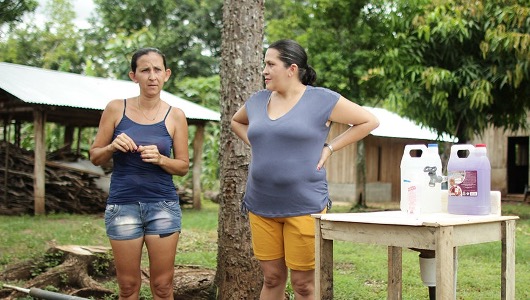
The impacts of climate change on water resources are visible in regions like Nicoya and Guanacaste, where droughts are frequent, and rivers can dry up for months. ASADAs in these areas have become vital in managing dwindling water supplies sustainably. For instance, in Iguanita, women lead their local ASADA, ensuring responsible water management for around 90 families. This local leadership underscores the importance of inclusive, community-driven approaches to resource management in challenging environmental conditions.
Since 2016, a project spearheaded by the Costa Rican Institute of Aqueducts and Sewers (AyA), with support from UNDP and the GEF’s Special Climate Change Fund, has been working to strengthen the capacity of ASADAs. This project has been transformative, focusing on communities in Northern Costa Rica facing severe water stress. Through training in climate adaptation strategies, water quality management, and reforestation techniques, ASADA members gain essential knowledge and skills to tackle current and future climate challenges.
Gender Inclusion in Water Management
A standout feature of the ASADA model in Costa Rica is its commitment to gender inclusion, with a strong focus on empowering women in sustainable water management roles. The AyA guidance includes gender-specific policies to ensure women can access decision-making and leadership opportunities within ASADAs. This not only promotes gender equality but also enriches water management by leveraging diverse perspectives and skills.
In Iguanita and other communities, women-led ASADAs exemplify how inclusive approaches can foster a more resilient water management framework, equipping local leaders with the knowledge and technology skills needed for sustainable practices.
ASADAs: Building Community Identity and Resilience
ASADAs are more than just water providers—they embody democratic, citizen-driven initiatives that strengthen local identity and community solidarity. They serve as platforms for defending water resources, exercising the human right to water access, and, critically, building resilience against climate change.
Through their continued partnership with organizations like the UNDP and the GEF, Costa Rica’s ASADAs set an example for community-based water management in the face of global challenges. This approach to sustainable water access, rooted in democratic participation and inclusivity, holds promise not only for Costa Rica but also as a model for other nations facing similar challenges in adapting to climate change.