Access to safe water and sanitation is a human right, as recognized in 2010 by the United Nations General Assembly (UNGA). The Human Right to Water and Sanitation (HRWS) is inextricably linked with other human rights and therefore lack of access equally has a profound negative impact on many of the related human rights.
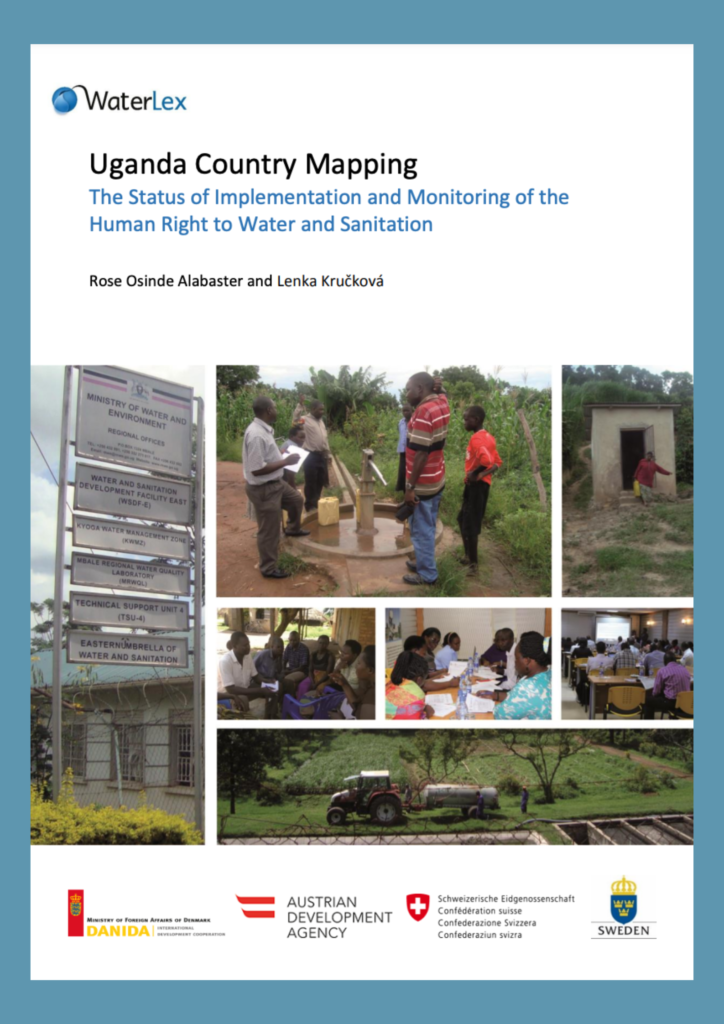
This one-year research was undertaken to establish the status of implementation and monitoring of the human right to water and sanitation in Uganda, in order to provide support for increased alignment of the legal framework, key sector policy frameworks, implementation and monitoring strategies, with the existing human rights commitments of the government.
This project was designed as a baseline study, using the WaterLex Country Mapping tool, which ultimately aims to identify gaps at the levels of: legal and policy framework through a structural analysis; planning and implementation of the public policies through a process analysis; and monitoring of public policies through an outcome analysis. As a result, a comprehensive multi-stakeholder analysis was undertaken through extensive desk reviews of the legal and policy frameworks; stakeholder mapping undertaken at the levels of law and policy-making, planning, implementation and monitoring; and evidence collected through field studies in the five sample districts – Kisoro, Nakapiripirit, Lira, Kamuli, and Amuru.
These districts were selected through both random and purposeful sampling, using an agreed protocol defined and approved by the Project Steering Committee that was established and chaired by the Ministry of Water and Environment (MWE). Research findings were shared in a national stakeholder workshop during which an action plan for targeting the current unserved and underserved population of Uganda was defined to support the government’s efforts for securing universal access to safe water and sanitation.
