Protecting Our Heritage in a Changing Climate: Insights from the Royal Irish Academy
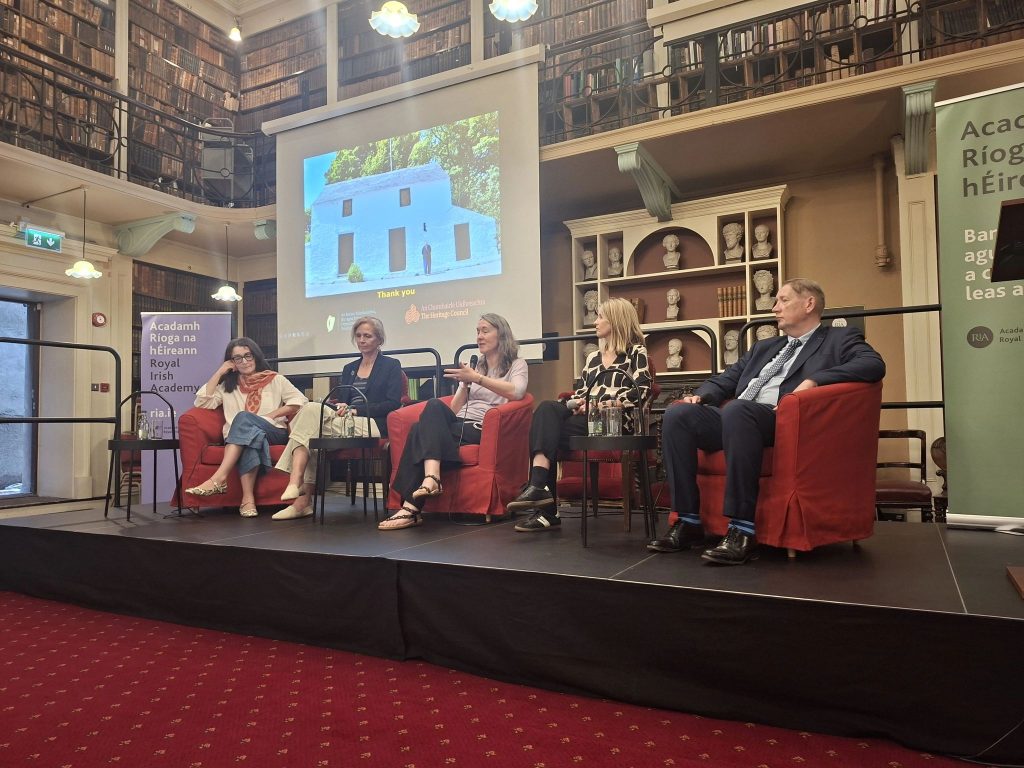
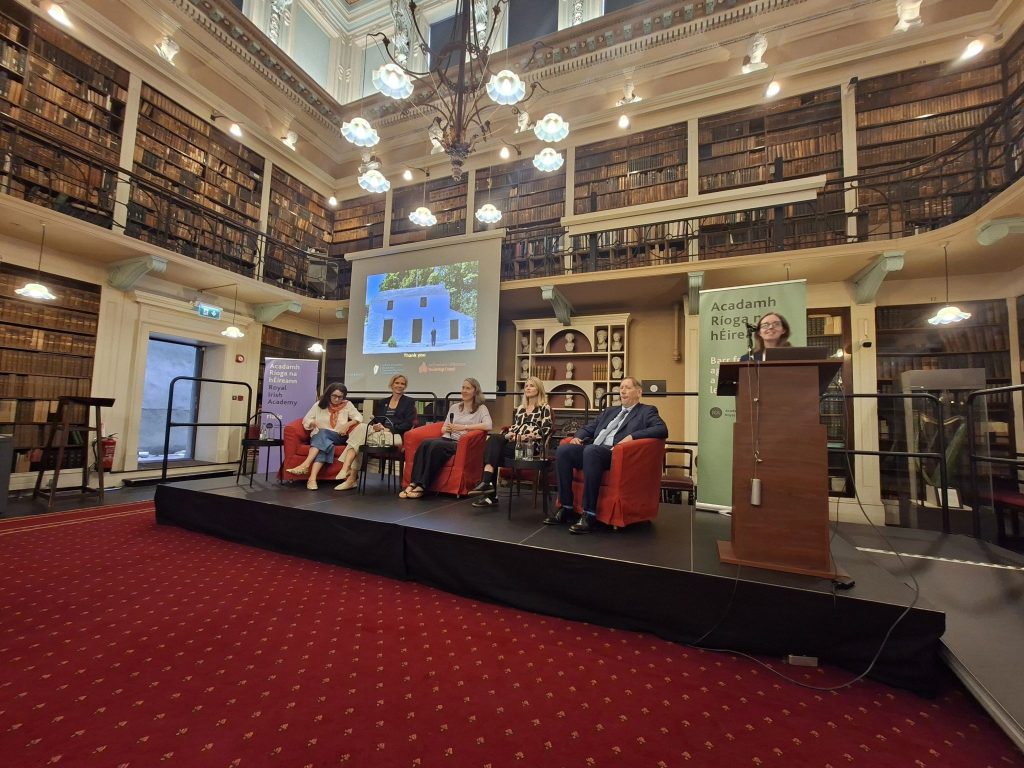
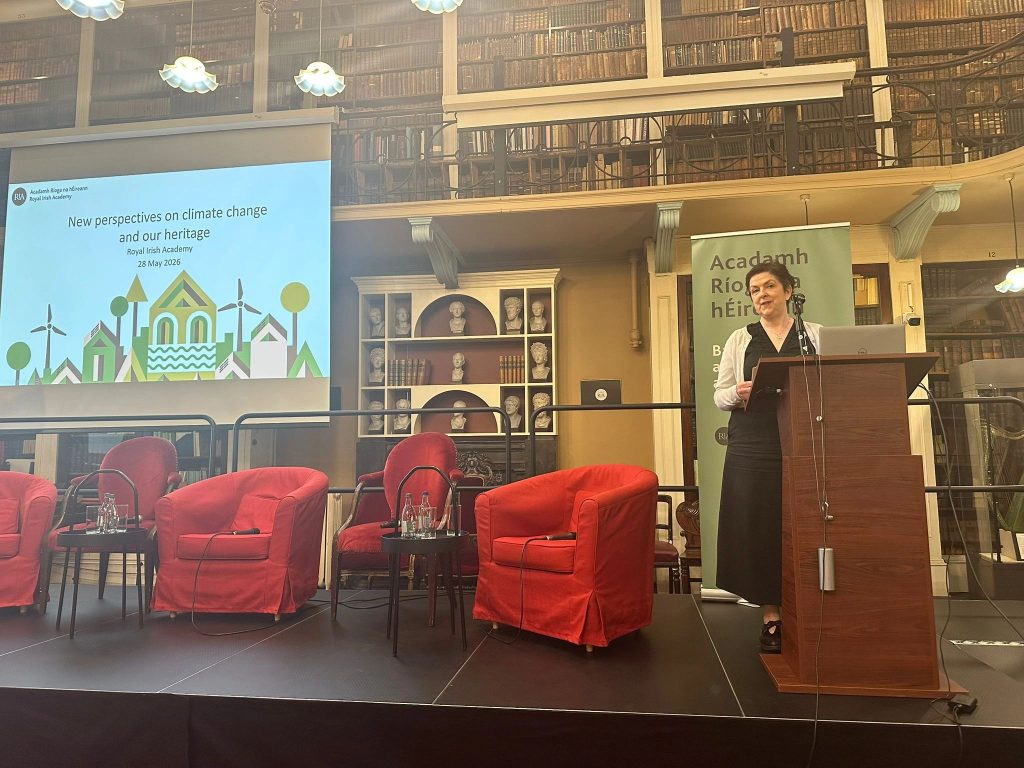
Water hazards and climate change events are placing cultural heritage under unprecedented strain. In response, the Royal Irish Academy convened a conference under the theme “New Perspectives on Climate Change and Our Heritage” bringing together researchers, policymakers, and practitioners to chart a course forward.
The session prompted participants to reflect on the 2025 Built & Archaeological Heritage Sectoral Adaptation Plan, explore strategic coordination at the European level, and engage with real-world case studies on protecting Ireland’s natural and cultural heritage.
Speakers
The conference drew participants from a wide range of disciplines and institutions:
Widening strategies for hydroclimatic extremes
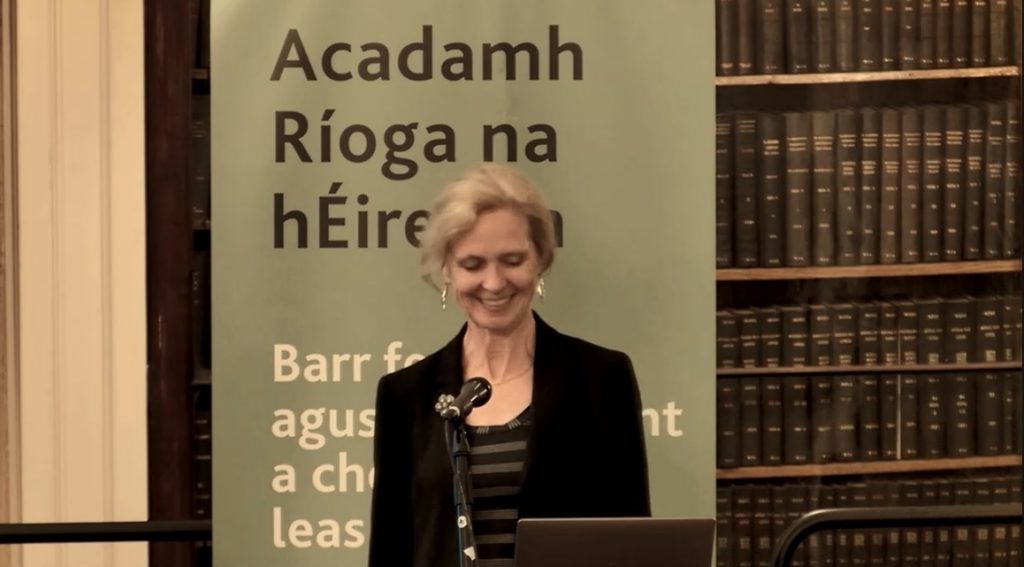
Amanda Loeffen was invited as the Keynote speaker for this event representing SD-WISHEES and HR2W. Amanda presented the newly completed SD-WISHEES Roadmap which makes the case that cultural heritage is not merely a victim of climate change, it is a repository of knowledge and practices that can actively support climate resilience and adaptation. Protecting it requires widening strategies to tackle hydroclimatic extreme events at scale.
The Roadmap, through a robust consultation using the Delphi process, identifies four main challenges in the Nexus of Cultural Heritage and Climate Adaptation that must be addressed through research and innovation:
Strategic research & innovation priorities
Recommendations
Recommendation 1
Support informed decision-making
- Embed the WCCH Nexus in funding calls and strategic agendas
- Commission targeted research and innovation actions
- Advance risk assessment, monitoring, diagnostics, and decision-support tools
- Strengthen knowledge translation in science-policy cooperation
- Pilot demonstration sites in real-world contexts
Recommendation 2
Strengthen cross-sectoral and transnational cooperation
- Establish dedicated research and innovation programming mechanisms
- Build EU–Africa and EU–Balkans partnerships
- Support transboundary and shared heritage research
- Develop regional hubs and communities of practice
Recommendation 3
Empower communities, youth, and local knowledge systems
- Create participatory and co-creative research mechanisms
- Establish structured pathways for youth participation and leadership
- Promote community-centred communication, climate literacy, and knowledge translation
- Integrate indigenous, traditional, intangible, and living heritage into research and innovation frameworks