Integrating Menstrual Health into WASH Policy, development and Public Health
Menstrual health has long been treated solely as a hygiene issue in the water, sanitation, and hygiene sector. As the conversation scaled globally, MHM has become a collective effort to put forward an agenda to set standards and push it forward as a human right. At this year’s World Water Week, HR2W co-convened a side event to challenge that framing directly: how can menstrual health be more systematically integrated into WASH policy, national sanitation strategies, and gender-responsive investment frameworks?
The session brought together voices from development finance, public health, and water governance to explore practical entry points for governments, utilities, and partners — from standards for gender-responsive infrastructure to stronger monitoring indicators and sustainable financing.
Setting the Tone: MHM as a Human Right
The session opened with the opening remarks of the UN Special Rapporteur on the Human Rights to Safe Drinking Water and Sanitation, Pedro Arrojo-Agudo where he called on the importance of Menstrual Health Management and advocated for sexual education to become a normalised part of education for everyone, not a women’s issue siloed off from the rest of society. He insisted on the need for addressing MHM comprehensively and that as a society, this is an issue we cannot continue to defer. Central to his intervention was a reframing that ran through the entire session: people need to understand themselves as right-holders, and MHM needs to be treated as a human rights issue — not a matter of charity or convenience.
HR2W’s Research: Benchmarking MHM in Law and Policy
Isabella Cubillo walked participants through the evolution of MHM as a policy concept and the methodology behind the organisation’s global benchmarking work. Working with White & Case, HR2W produced 31 country studies, selected because they represent some of the most advanced MHM legislation globally. The findings were sobering: on average, the countries studied incorporated only 45% of the legal provisions required by human rights standards. The weakest areas were sustainability, affordability, and access to information; the strongest were accountability and acceptability, largely thanks to existing educational policy and legal redress mechanisms.
Two case studies illustrated this in practice:
- India — Accountability: The Indian Constitution offers two key entry points. Article 14 guarantees equality before the law, usable to challenge discriminatory MHM practices, while Article 21’s right to life and personal liberty has been interpreted by courts to include the right to health, hygiene, and dignity. These protections are enforceable — in Young Lawyers Association v. State of Kerala, the Supreme Court held that excluding menstruating-age women (10–50) from the Sabarimala temple violated their constitutional rights.
- France — Accessibility: France embeds accessibility into binding regulation across two settings. The Code of Public Health requires hospitals to maintain internal committees dedicated to infection prevention, including sanitation measures. The Labour Code obligates employers to maintain clean facilities, ensure proximity of toilets and sinks, provide separate facilities for men and women, and guarantee safe, hygienic sanitary services.
Isabella also presented the recently published work on Latin America and Spain available in both English and Spanish, assessing legislation against on-the-ground practice across Brazil, Chile, Colombia, Mexico, and Spain. The regional average sits at 51% of MHM criteria covered — with Colombia leading the region at 60%, the most progressive country for MHM inclusion in national law. Regionally, accountability remains the strongest criterion at 65%, while participation lags furthest behind at just 30%. That gap — the absence of real mechanisms for menstruators themselves to shape the policies that govern them — is one of the clearest areas for improvement, and sits at the center of the report’s recommendations.
Regional Perspectives: Africa’s Implementation Landscape
Comfort Kanshio, Sanitation Lead for African Union Member States, grounded the conversation in the realities of implementation across the continent. She was candid about the obstacles: stigma remains a persistent barrier, financing is inconsistent, and capacity-building lags behind policy ambition. But she also pointed to clear opportunities — harmonizing policies across member states, strengthening indicators to actually track progress, engaging private sector and youth enterprise, and building intersectoral coordination so that MHM isn’t left to health ministries alone.
Schools as a Lever for Change
Chris Nicoletti, Chief Impact and Strategy Officer at Splash International, made the case for schools as one of the most effective entry points for systemic change. Keeping girls in school, improving health and wellbeing outcomes, and building replicable models were central themes. But he was equally focused on what comes after a pilot succeeds: scaling requires funding, evidence, and coordination working in tandem — not just proof of concept.
Locally-Driven Innovation
Elise Mann, WASH Portfolio Lead at iDE, shared a case study on locally-driven innovation in MHM — highlighting how initiatives rooted in local context and quality product development can move faster and more sustainably than top-down interventions.
Taking the Agenda Global
Marije Broekhuijsen, WASH, Disaster Risk Reduction & Climate Change Adviser at UNICEF, closed the substantive discussion (following an interactive Mentimeter exercise with attendees) by calling for country-level leadership to be matched with global momentum. Advancing the menstrual health agenda, she argued, requires sustained investment, better data and monitoring, and comprehensive solutions that don’t treat MHM as an isolated program line.
Summarising the event
Across every speaker, a consistent thread emerged: menstrual health is not a peripheral WASH concern to be addressed once “core” infrastructure is in place — it is core infrastructure, and it is a human right’s issue. The evidence base for this is growing, the entry points are identifiable (constitutional law, labour codes, school systems, procurement standards), and the gaps are well understood — particularly around participation and sustainable financing. But a lot remains to be done, we need to focus on translating that evidence into binding policy, adequate budgets, and monitoring frameworks that hold governments and utilities accountable.
Speakers
Voices from across the water sector joining our sessions. Tap a name to read their full bio.

Chris Nicoletti
Chief Impact and Strategy Officer, Splash International
Chris is Splash’s Chief Impact & Strategy Officer, leading global strategy, programs, impact, measurement, and learning to expand access to clean water, sanitation, handwashing, and menstrual health services for children in schools. He specializes in impact evaluation, cost effectiveness analysis, information systems, and human centered design, working with governments and partners to design, scale, and improve programs across Africa, Asia, and Central America, with experience in more than 25 countries.

Comfort Kanshio
Sanitation Lead, African Union Member States
Comfort Kanshio leads strategic sanitation initiatives across African Union member states and was instrumental in developing the pro-poor, gender-responsive African Sanitation Policy Guidelines, currently supporting its implementation across Africa. She has forged high-level partnerships with UNICEF, WHO, ECOWAS, the World Bank, and the AfDB.

Elise Mann
WASH Portfolio Lead, iDE
Elise Mann works at the intersection of human rights, global health, and social impact, with experience spanning family planning in Uganda, nonprofit sustainability in Tanzania, and emergency obstetric services in Zambia and Malawi. She currently supports iDE’s WASH portfolio using human-centered design.

Isabella Cubillo Kogel
Communications Officer, Human Right 2 Water
Isabella is originally from Costa Rica, where she earned her degree in Political Science at the University of Costa Rica. Her roots and passion for environmental and social justice have inspired her to work for international organisations. She has previously volunteered for CISV International and worked as a knowledge management intern at the San José Regional Office of the International Organization for Migration. She initially joined Human Right 2 Water as a volunteer and, after a period with IOM, rejoined as Communications Officer.

Marije Broekhuijsen
WASH, Disaster Risk Reduction & Climate Change Adviser, UNICEF
Marije Broekhuijsen is an ambitious, hands-on professional with 18 years of experience in development and emergency settings, spanning WASH, disaster risk reduction, and climate change. A self-motivated manager and advisor, she brings strong skills in coordination, capacity building, knowledge management, and strategy development.

Pedro Arrojo-Agudo
UN Special Rapporteur on the Human Rights to Safe Drinking Water and Sanitation
Pedro Arrojo-Agudo has served as UN Special Rapporteur on the human rights to safe drinking water and sanitation since November 2020. Previously, he was an elected member of the Spanish Parliament (2016–2019) on the International Cooperation Committee, and Professor of Fundamentals of Economic Analysis at the University of Zaragoza (1989–2011), where he is now professor emeritus. In 2002 he co-founded the New Water Culture Foundation and later the Public Water Network, advancing human rights, transparency, and public participation in water management. He was awarded the Goldman Environmental Prize in 2003 for his work on water ecosystem conservation and water conflicts affecting vulnerable communities. He holds a degree in Physical Sciences and a PhD in Fluid Engineering, and has published over 100 scientific articles and 70 books.

Richard Johnston
Technical Officer, JMP, World Health Organization
Dr. Rick Johnston is a Technical Officer in the WASH and Health unit at the World Health Organization, where he co-leads the WHO/UNICEF Joint Monitoring Programme (JMP) and leads WHO’s work on wastewater monitoring. He previously led water supply and treatment research at Eawag in Switzerland and spent seven years in Bangladesh working with UNICEF on arsenic mitigation. He holds a PhD in environmental engineering from UNC Chapel Hill and has authored over 80 publications with more than 6,000 citations.
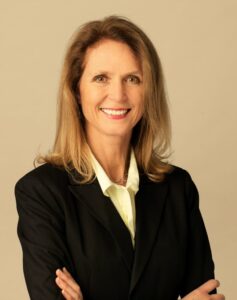
Amanda Loeffen
Moderator · CEO, Human Right 2 Water · Vice-Chair, Water4All Governing Board
Amanda Loeffen works at the intersection of human rights, water governance, and innovation, turning global commitments into real-world impact. She is CEO of Human Right 2 Water, advancing rights-based, gender-responsive approaches to water governance, and serves as Vice-Chair of Water4All’s Governing Board.

