6th AGM: A Year of Growth, New Voices, and Renewed Commitment
Research milestones for 2025
This year marked significant step forward in HR2W’s research programme. Building on our established leadership in menstrual health management (MHM), we expanded our work into a new area, developing together with our Expert Committee an innovative methodology to advocate for biodiversity as a human right This approach complements existing rights-of-nature frameworks by placing human rights at the centre of biodiversity protection. We have now completed or are finalising 31 national legal mapping reports on MHM and 28 ob Biodiversity. Together, these publications form a growing global knowledge base that will support evidence-based advocacy, inform policy reform, and strengthen national implementation for years to come.
Publications Making an Impact
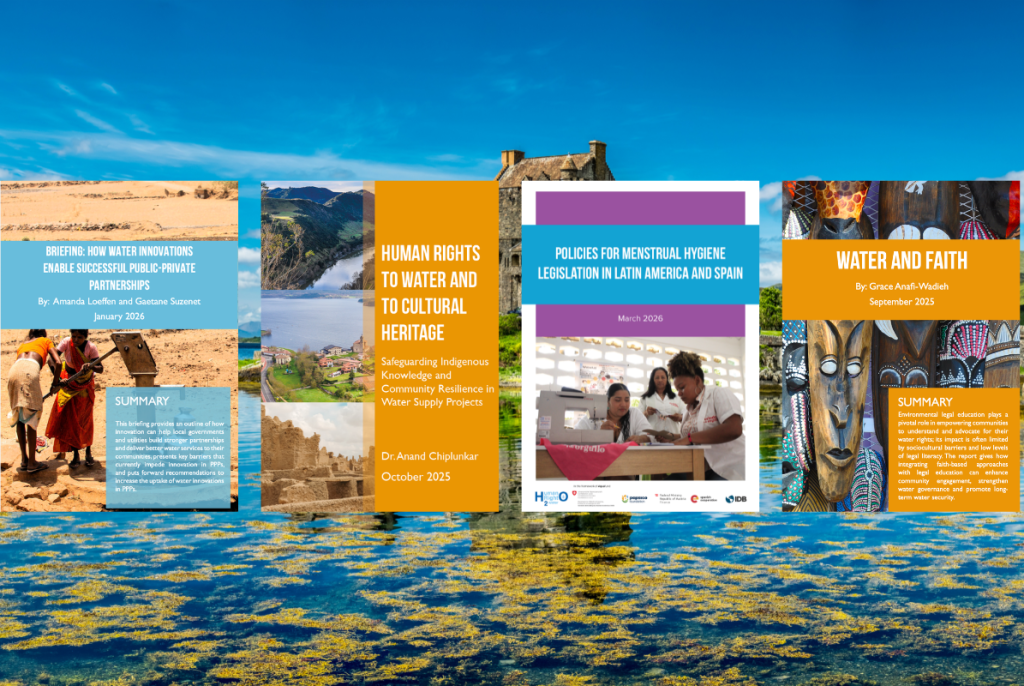
HR2W’s research output this year spanned a wide range of pressing issues:
- Two publications exploring tangible and intangible heritage and the role of faith in water governance
- How Water Innovations Enable Successful Public-Private Partnerships by Amanda Loeffen and Gaetane Suzenet: A paper on inclusive water innovation in public-private partnerships
- Policies for Menstrual Hygiene Legislation in Latin America and Spain by HR2W and IDB: A review of MHM legislation across Latin America (available in English and about to be published also in Spanish), developed with the Inter-American Development Bank and launched on World Water Day 2026
- Human Rights to Water and to Cultural Heritage by Dr. Anand Chiplunkar: A study on water rights and cultural heritage drawing on 24 case studies
All publications are available on HR2W’s website.
From our community:
The AGM featured powerful contributions from members and guests, working at the frontlines of water rights and innovation:
Nelson Gomonda (AMCOW) introduced Africa’s new Water Vision and Policy, adopted at ministerial level and launched at the African Union Summit in February 2026 — a roadmap toward a water-secure, resilient continent, with an implementation plan now being developed for endorsement by early 2027.
Ariana Rossen (Instituto Nacional del Agua, Argentina) shared two community-centered innovations: a solar-powered household rainwater disinfection system, and “PlumBox,” a biosensor developed by the University of Buenos Aires that detects lead in drinking water through a simple bacterial color-change reaction.
Jim Taylor (University of KwaZulu-Natal) told the remarkable story of Zongile Ngubani, a South African resident whose decade of independent daily water monitoring uncovered a 20-year untreated sewage discharge into Durban’s water supply — a powerful example of citizen science driving real regulatory change. Taylor also highlighted “miniSASS,” a biomonitoring technique now used at over 4,000 sites across South Africa and recognized by the UN for global SDG indicators.
Milton Income, a hydraulic engineer from Mozambique, spoke about grassroots work training children and vulnerable women in agriculture, savings, and water resource management — rooted in identifying problems together with communities.
Welcoming New Board Members, and thank you’s
The AGM also marked a moment of transition and renewal for HR2W’s governance. Members warmly thanked retiring Board members Anand Chiplunkar, Sylvia Rivera, Andres Sanchez and Diana Iskreva for their years of contribution, and welcomed three new Board members who were elected at the meeting:
- Natasha Dokovska (North Macedonia, Women for Water Partnership), bringing expertise in WASH, menstrual health, and environmental justice
- Geraldine Gene (Costa Rica), a founding member of HR2W with deep, longstanding ties across Latin America
- Sanjay Banka (India), with around 15 years of WASH experience across India, Asia, and beyond
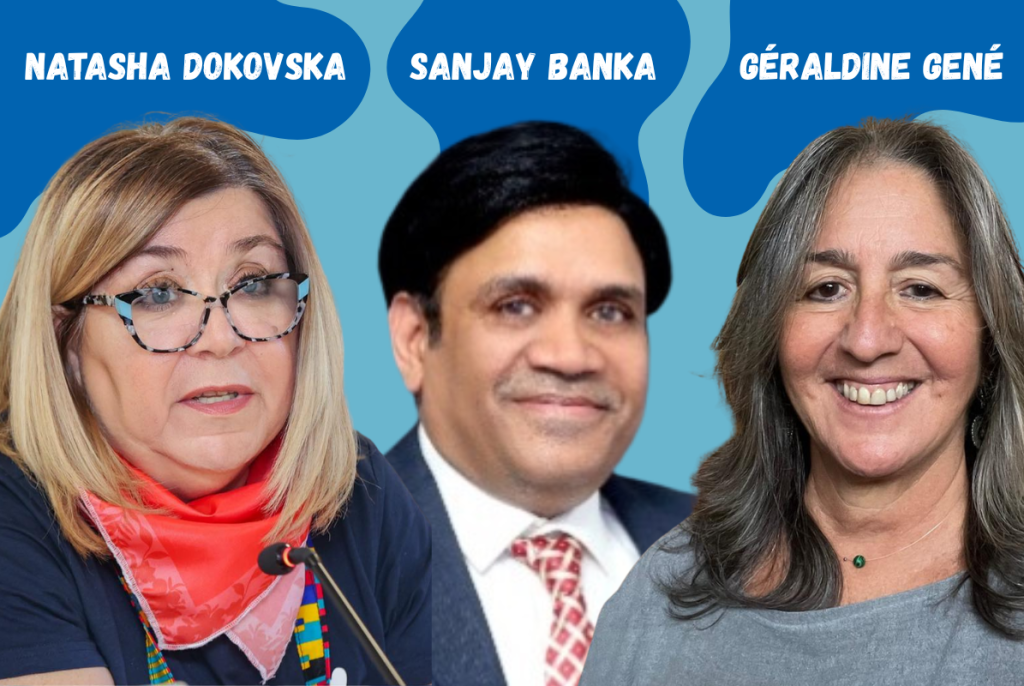
The new Board of Human Right 2 Water members are Pedi Obani (President), Callum Clench (Secretary), Mamohloding Maahlo (Treasurer), Dhesigen Naidoo (Past-President), Mercedes Castro (Past-President), Dominique Gatel, Geraldine Gene, Natasha Dokovska, Olcay Unver and Sanjay Banka.
Their leadership will help guide HR2W’s continued growth across regions and research areas.
More in-depth background is available on the activities of HR2W last year in our 2025 Annual Report here.
Looking Ahead
HR2W is expanding its research and advocacy agenda while remaining firmly rooted in its core mission. Biodiversity as a human right is emerging as a major area of focus alongside our continued leadership in menstrual health management. Both themes are expected to feature prominently at international forums, including World Water Week in Stockholm and, potentially, the UN Water Conference later this year. At the same time, HR2W is developing an innovative benchmarking platform for water utilities that will enable organisations to assess and strengthen their implementation of human rights-based approaches, with software piloting planned for later in 2026.
As HR2W enters its next chapter, our commitment remains unchanged: to generate practical, evidence-based solutions that advance the human rights to water and sanitation, strengthen environmental stewardship, and support more equitable, resilient and sustainable water governance for people and the planet.
