Strategic Foresight Workshop in Helsinki, Finland
As part of the efforts to update its Strategic Research and Innovation Agenda (SRIA), Water4All hosted a foresight workshop in Helsinki, Finland, on January 15th and 16th. The event gathered leading water experts to explore key trends and drivers influencing the future of water-related research and innovation at both European and global levels. Foresight is a powerful strategic thinking methodology that allows us to prepare for extreme events rather than simply following current trajectories. Our CEO, Amanda Loeffen joined the Water4All workshop, where experts in water governance, economic development, and technological research institutions gathered. Over two days, participants worked through a structured process to develop five potential global water trend scenarios.
The workshop brought together 25 water specialists for dynamic and insightful discussions. It aimed to foster a shared vision for the future of the water sector while contributing valuable input to the upcoming update of the Water4All Strategic Research and Innovation Agenda.
Main Takeaways
The Future Wheel Technique
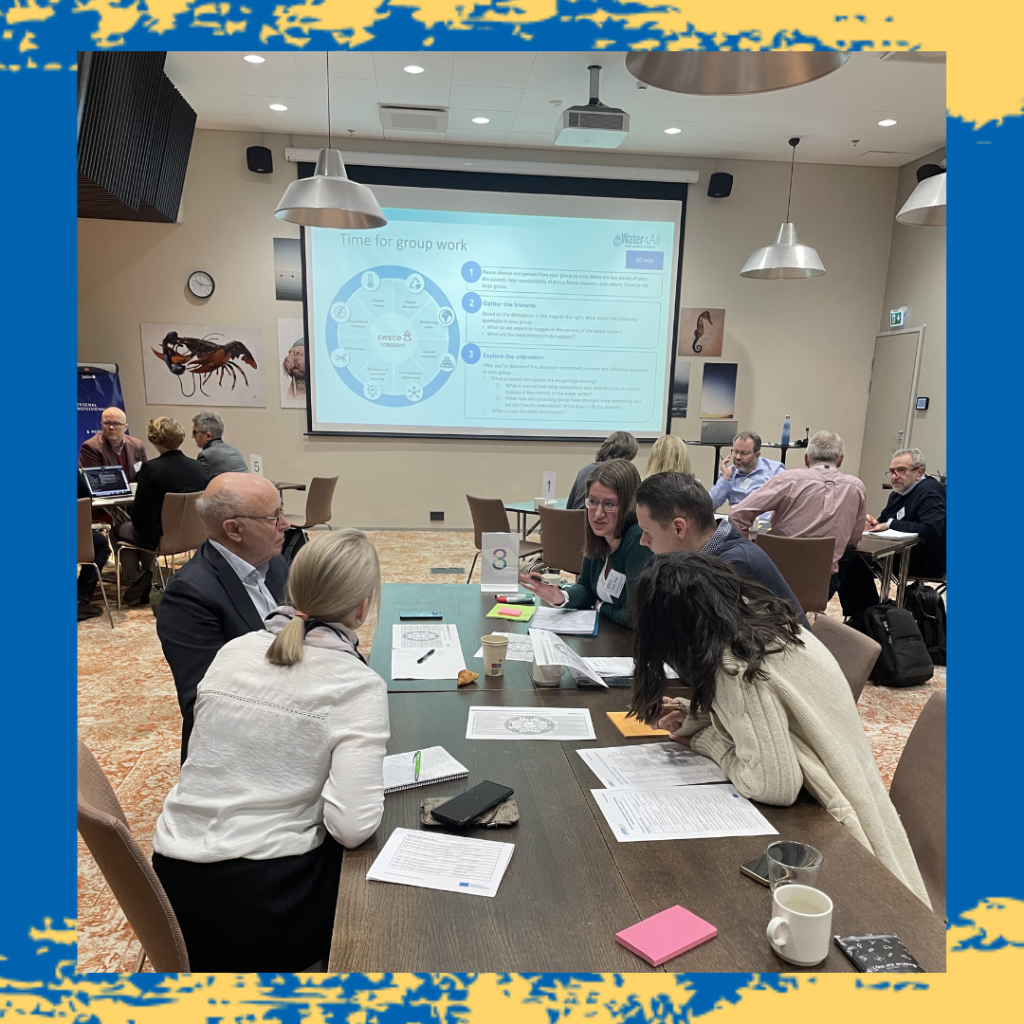
A key element of the workshop was the use of the Future Wheel technique, a foresight method designed to analyze the ripple effects of potential disruptors. This approach enables participants to map out primary, secondary, and tertiary consequences of major trends and events, providing a deeper understanding of interconnected challenges and opportunities.
The workshop identified critical disruptors, including climate change, geopolitical tensions, technological advancements, and pressing water-related issues such as scarcity, pollution, and declining groundwater quality. By using the Future Wheel, participants were able to visualise the complex impacts of these challenges, highlighting their complicated influence on ecosystems, societies, and economies.
Actionable Opportunities
While many scenarios highlighted growing uncertainty—particularly regarding geopolitical instability and disruptions to water systems—the workshop and its participants also made incredible effort to highlight that there are some actionable opportunities. The discussions among experts revealed varying priorities, some focused more on financing, others on biodiversity, agriculture, and so on. There was also some debate on the influence of human behaviour versus environmental impacts. Some participants prioritised factors within human control, such as technological innovation, whereas others underscored external forces like climate change and geopolitical shifts.
Despite these differences, there was a strong consensus on the need for interdisciplinary collaboration, the inclusion of marginalised voices, and strengthening resilience through capacity building and inclusive governance. A key takeaway from the workshop was the need and the potential to transform risks into opportunities through evidence-based policymaking, enhanced risk management, and innovative solutions.
